

What are Stem Cells?
Stem cells are special cells in the human body that have the ability to develop into a variety of different cell types to replace or repair damaged cells in the body. Stem cells have two properties that distinguish them from other cell types. Stem cells can divide and produce daughter cells that either replicate (self-renewal) or acquire characteristics of a more mature cell type (differentiation). The balance between these two outcomes can vary depending on the stem cell type and the environment, but stem cells must have both abilities.
SIMPLY :
Stem cells can be described as 'factories' for any cells in the human body. Because of their function as 'cell factories,' this function is then utilized by the medical world to treat various diseases.
Types of Stem Cells
There are three main types of stem cells:
- Embryonic stem cells
- Inducing pluripotent stem cells
- Adult stem cells or mesenchymal stem cells
Embryonic stem cells
Embryonic stem cells used in research today come from unused embryos. These come from in vitro fertilization procedures. They are often used in scientific research and disease models. These embryonic stem cells are pluripotent. This means they can become all cell types.
Advantages: Embryonic stem cells can differentiate into ectoderm, mesoderm and endoderm.
Disadvantages: Ethical issues involved, may produce teratomas and develop into tumor stem cells.
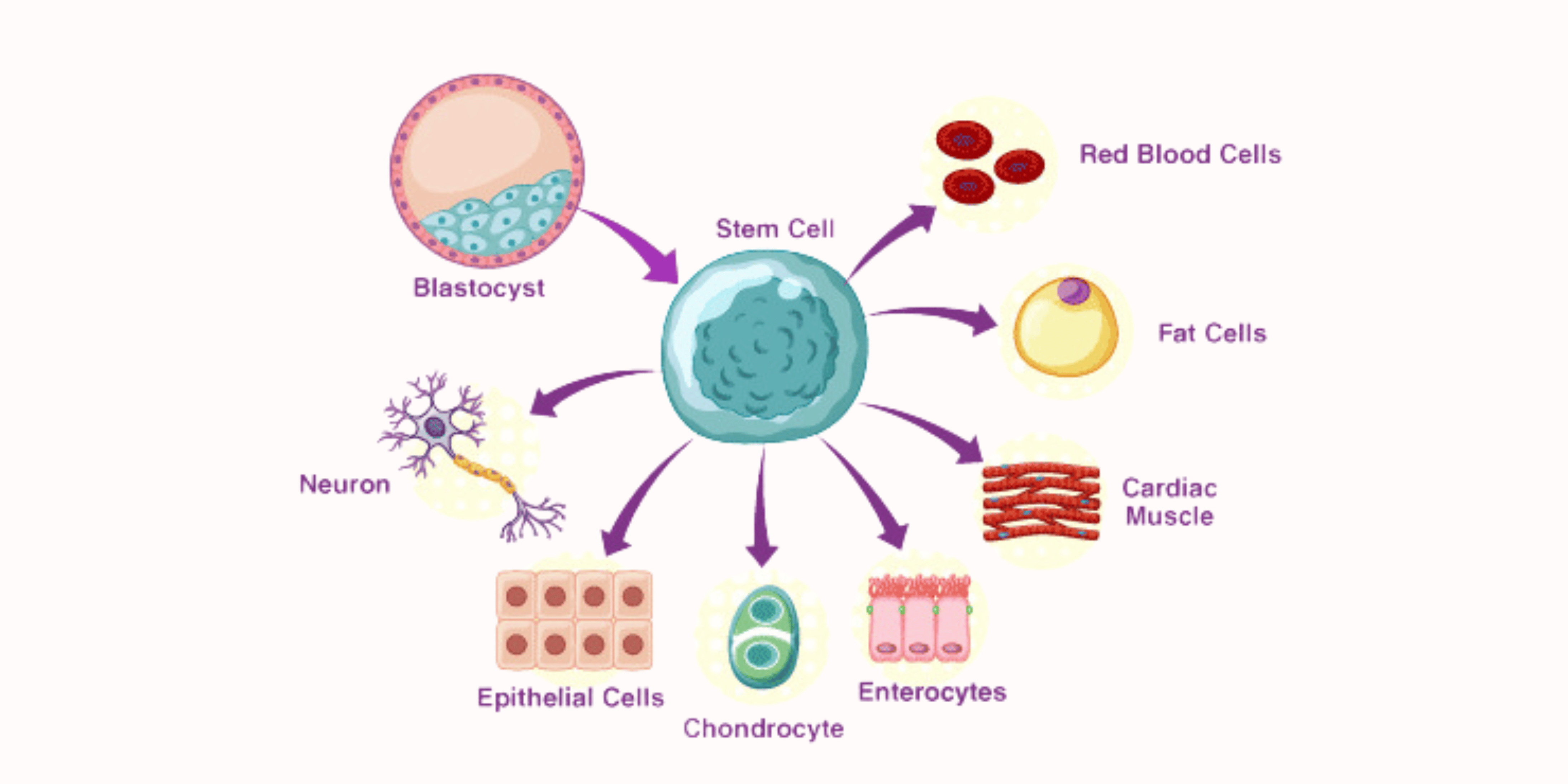 EMBRYONIC STEM CELL
Inducing Pluripotent Stem Cells
Induced pluripotent stem cells, or iPS cells, are stem cells that scientists create in a laboratory.
“Induced” means they are made in a laboratory by taking normal adult cells (like skin or blood cells) and reprogramming them into stem cells.
Like embryonic stem cells, they are pluripotent, so they can develop into any cell type.
Advantages: Widely used in medical research and drug testing and disease models.
Disadvantages: May produce teratomas and develop into tumor stem cells.
Adult Stem Cells or Mesenchymal Stem Cells
Adult stem cells or mesenchymal stem cells provide new cells and replace damaged cells as an organism grows.
Adult stem cells or mesenchymal stem cells are called multipotent stem cells, which means that they can only become certain cells in the body, not just any cell, such as:
Blood or hematopoietic stem cells can only replace the various types of cells in the blood lineage.
Dermal or epithelial stem cells provide the different types of cells that make up our skin and hair.
Adipose tissue, body fat or simply fat, is also a good source of mesenchymal stem cells, which can differentiate into bone, cartilage and muscle.
Advantages: Can differentiate into bone, cartilage and muscle.

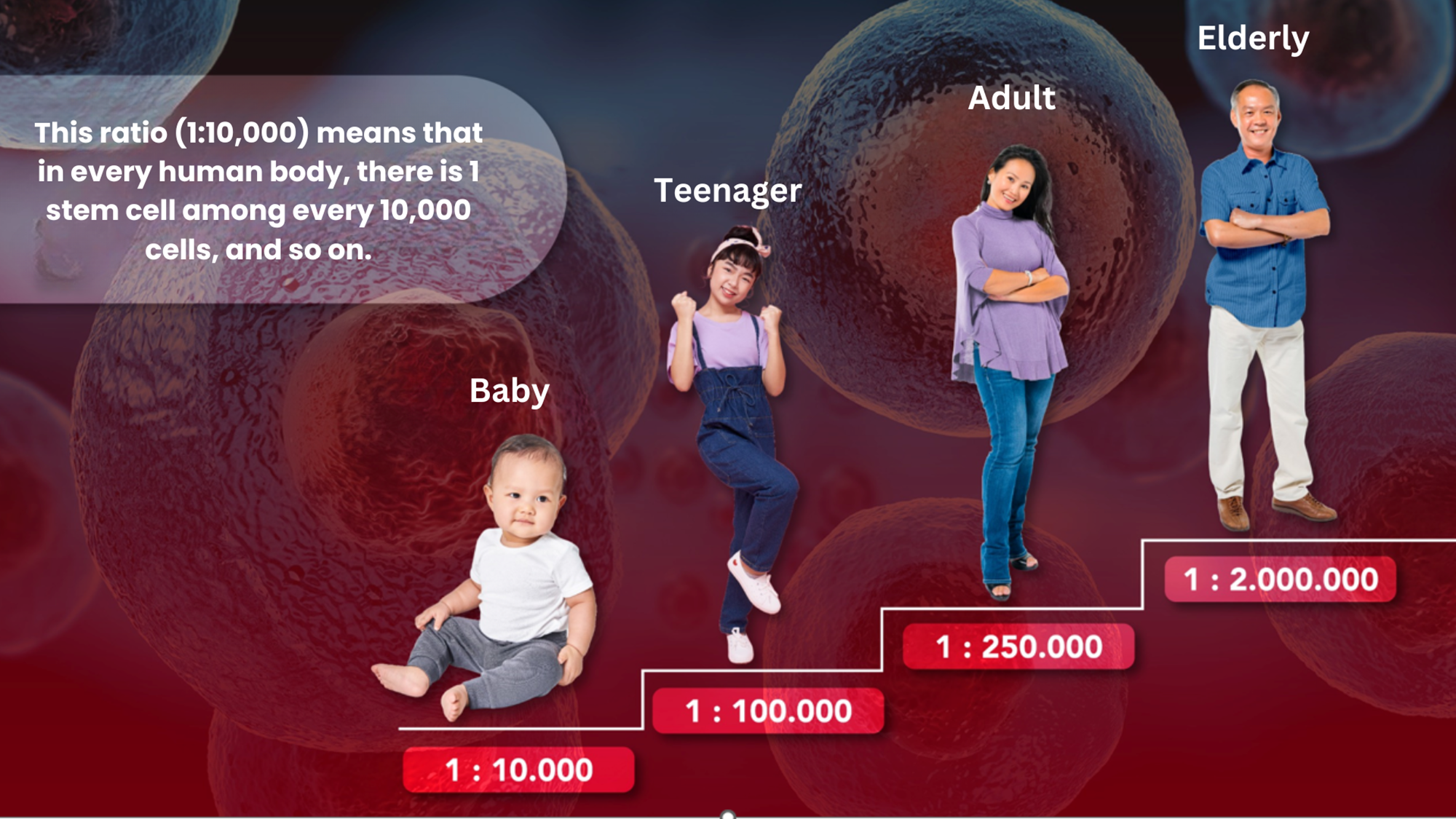 AS WE AGE, STEM CELL RATIO TO OUR CELL DROPS MASSIVELY.